Our focus is on regenerative farm practices.
Regenerative agriculture is a farming and grazing approach that focuses on restoring and enhancing the health of the soil rather than just sustaining its current state.
Regenerative agriculture prioritizes practices that mimic natural ecosystems, working with nature rather than against it. At its core, it seeks to improve soil health, increase biodiversity, sequester carbon, and enhance water retention while producing nutritious food.
1. Produce foods through farming practices that reduce emissions and benefit environmental resources such as air, water, and land by minimizing pollution.
2. Promote native biodiversity of plants and animals and protect native ecosystems from agricultural impacts without contributing to the wildlife extinction crisis.
3. Support healthy, just, humane and sustainable farming that supports public health and environmental justice.
Our farm works in harmony with nature.
01
Diversity
Diversity is a key principle of farming with nature, which is increasingly recognised as a regenerative approach to land management.
The focus often begins with introducing multiple forage species through practices such as cover cropping, direct drilling additional species into existing pastures, and adjusting grazing regimes to create conditions that support a wider variety of plants.
However, diversity should be present at every level of the farming system:
- In the soil, with a wide range of life forms (microbiome).
- In functional plant groups, including grasses, forbs, legumes, shrubs, trees and others.
- In species within each functional group.
How we are adding biodiversity:
- Planting native trees and shrubs. Planting native plants supports local ecosystems by providing essential food and habitat for pollinators and wildlife, which have evolved alongside these species.
- Adding silvopasture--the intentional integration of trees, forage, and livestock—enhances farm productivity and sustainability.
- Frost seeding and no till drilling new plant varieties.
- We compost our winter bedding pack and spread this on our fields. Compost benefits soil biology by improving the diversity and abundance of beneficial soil organisms, who feed on soil organic carbon and make nutrients available for plants to use.
02
No tilling
Instead of tilling, we utilize no till seed drills and frost seeding to increase plant diversity which in turn boosts soil microbiomes. These practices leave little/ no soil disturbance, while
requiring few trips over fields and
provides the most surface residue cover and runoff/ erosion protection.
When soils are left undisturbed, abundance and diversity of soil microbes increase, driving improved soil microbiome communities and soil structure. These improvements provide both ecological benefits as well as resiliency to crop stressors, crop quality, and ultimately yield.
Ecologically, these practices improve soil structure, reducing both wind and water erosion of soils, reduce agricultural run-off into watersheds, and aid in soil carbon sequestration. On the farm, as some regenerative agriculture theories suggest, growers adopting reduced or no-till practices may see many changes that will benefit their bottom lines economically while rebuilding their soils for future generations. Changes you will see with reduced or no-till practices include increased water penetration and retention, greater soil nutrient retention and availability to crops, less soil crusting, and increased soil organic matter over time. All of these contribute greatly to crop vigor, resiliency to crop stressors, and ultimately, crop yield. Additionally, there are cost reduction opportunities for growers, including reduced tilling soils, reduced requirements for fertilizers, and more efficient use of water resources. Altogether, reduced or no-till practices are key regenerative agriculture practices that will provide valuable benefits in both the near term as well as rebuilding soils for generations to come.
03
Grazing livestock integration
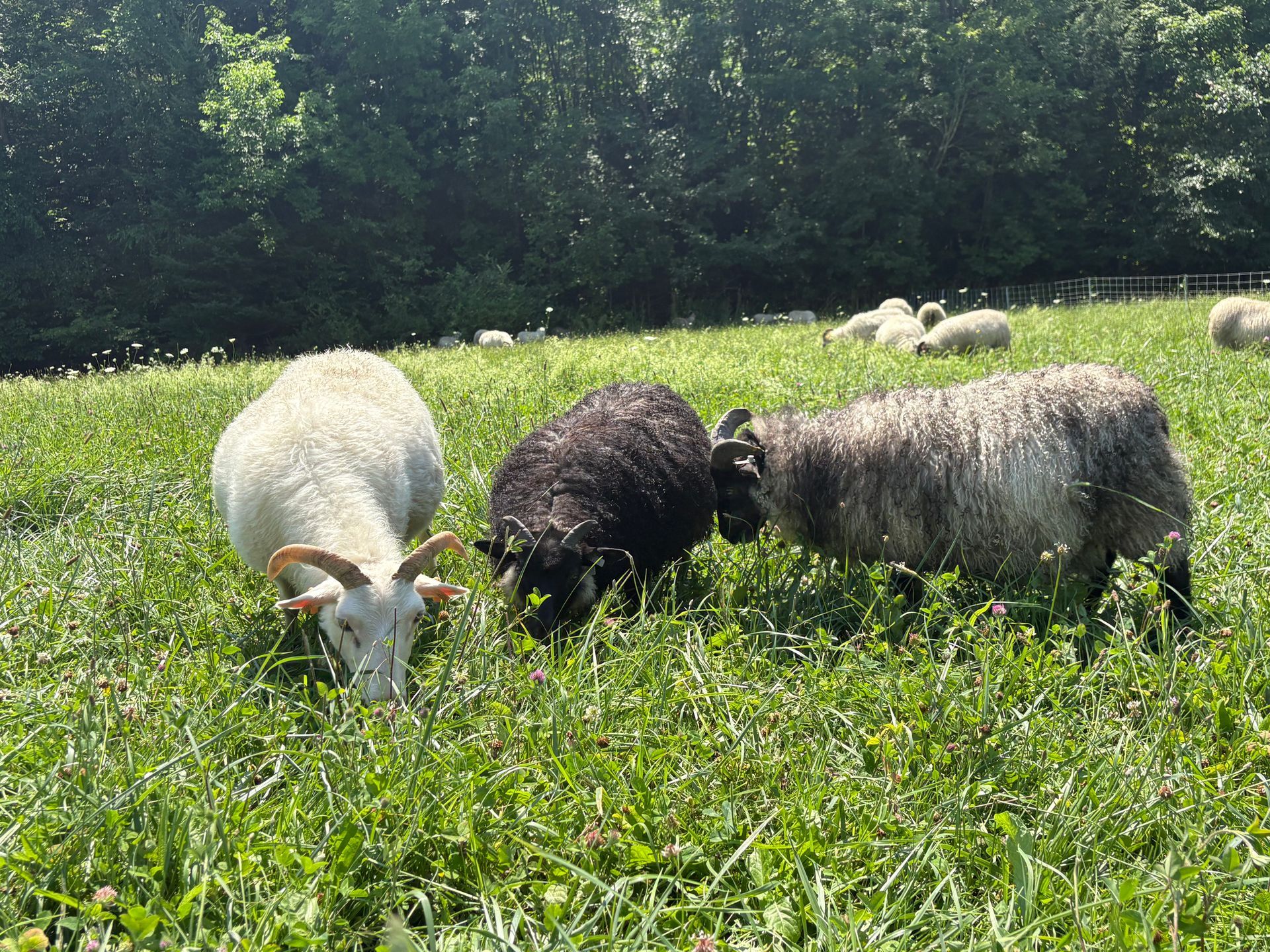
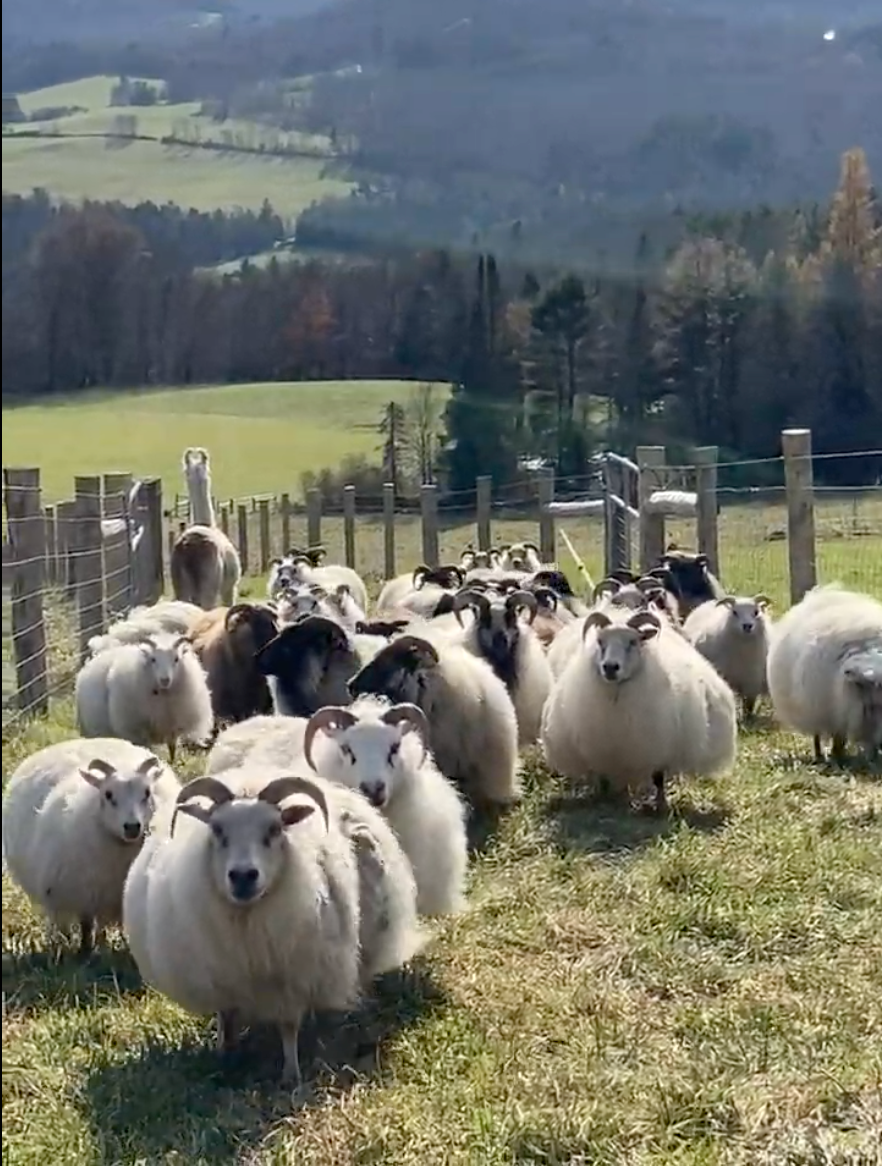
Carefully selected grazing of our Icelandic sheep flock benefits land and sheep both.
In managed grazing, divisions of a forage field are created. The divisions can be created using portable fences. The animals can then be shifted between the divisions periodically depending on the number of animals, the speed of forage growth, and the size of the divisions.
Animals are then shifted between divisions periodically to allow recovery and re-growth of a division prior to animal rotation. This practice will reduce soil erosion, improve water penetration, and reduce run-off, while at the same time provide quality livestock nutrition. Additionally, this practice will provide all the benefits of the continual plant and root growth to soil health and sequester carbon to build organic matter in the soil.
Managed rotational grazing is a critical regenerative agriculture practice that will improve soil health, nutrient and carbon cycling, grazing crop quality, animal health, and water retention while reducing soil erosion and run-off.
04
No chemical inputs
Chemical inputs like herbicides, insecticides, fungicides, and synthetic fertilizers degrade soil health. They alter soil pH, degrade its structure, and increase dependency on these chemicals, leading to higher costs for farmers and pollution of water sources. Regenerative agriculture eliminates the need for these chemicals by relying on healthy soil to support thriving ecosystems.
Soil is one of our most important tools in the fight against climate change. There are 2,500 billion tonnes of carbon stored in the world’s soils! That’s more than in the plants, trees and the atmosphere combined.
Organic farming creates healthy, living soils by nourishing them with compost, nitrogen-fixing crops, and crop rotations. Long term studies have shown that when comparing organic and conventional farming systems, soils in organic farms store more carbon and have higher levels of soil microorganisms.
Organic farmers must build fertile soils naturally. They use compost and manure (often sourced from their own farm or local herds), and rotate their crops to keep soils healthy.